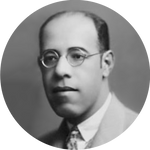
 Mário de Andrade
 Paulo Prado
 Antônio de Alcântara Machado
Editorial data
Revista Nova, a cultural publication from São Paulo, was directed by Mário de Andrade, Paulo Prado, and Antônio de Alcântara Machado. First published on March 15, 1931, it was quarterly in its first year (with issues in June, September, and December) and bimonthly throughout 1932 (published in February, April, and June), its last year of circulation. Due to the outbreak of the Constitutionalist movement of 1932, in which its editors were involved, issues eight, nine, and ten were published in a single volume.
Under the management of Nelson Palma Travassos, the magazine's editorial and administrative offices were located on Rua Xavier de Toledo, in downtown São Paulo, and each copy cost 5$000. The José Olímpio bookstore in São Paulo, Plinio Doyle in Rio de Janeiro, and João Mendonça in Recife were authorized to collect subscriptions.
With the cover almost entirely taken up by the summary, Revista Nova was considered a large periodical (22.5cm x 15.5cm), with an average of 150 pages per volume, and bore a significant similarity to the first series of Revista do Brasil (São Paulo, 1916-1925), both in terms of the graphic elements and layout of the text, as well as in terms of the editorial proposal.
The publication gathered a select roster of contributors, including Luís da Câmara Cascudo, Sérgio Buarque de Holanda, Alfredo Éllis Jr., Tristão de Ataíde, Manuel Bandeira, Prudente de Moraes, neto, Murilo Mendes, Guilherme de Almeida, Astrojildo Pereira, Alberto Rangel, Augusto Meyer, Sérgio Milliet, Amadeu Amaral Junior, and others.
In terms of internal organization, the publication had a set of sections that remained stable: Crônica, which covered a variety of topics and was directed by Prudente de Moraes, neto; Resenha, composed of transcriptions of diverse articles from other media outlets and was only absent from the last issue; Notas, which included general editorial reports, letters, books and magazines received, information on contributors, and errata, along with reviews of recently published works; Brasiliana, which reproduced excerpts from official documents and news items with unusual content; and, finally, Etnografia, which began in the second issue and was dedicated to themes related to folklore.
The magazine did not publish graphic content or commercial advertisements, limiting itself to promoting upcoming works and recently released modernist publications available in bookstores.
The end of Revista Nova was marked by the company's financial problems. It should be noted that the initial investment was made by the three directors, who guaranteed the resources for its two years of publication. It is safe to assume that the revenue earned was insufficient to maintain the publication. Furthermore, the departure of Mário de Andrade, who did not participate in the production of the final volume, may also have influenced the decision to end the publication, given the important role he played in making the periodical.
Natália Zampella